Hydrafacial for Acne-Prone Skin
Acne affects people of all ages, and many look for treatments that clean the skin without causing dryness or irritation. Hydrafacial has become one of the most requested procedures for acne-prone skin because it cleans, exfoliates, and hydrates in a single session. If you have frequent breakouts, clogged pores, or dull skin, you may wonder whether this treatment is right for you.
This blog explains how Hydrafacial works for acne, what to expect, and why it is becoming a trusted choice for many. You will also learn who benefits most, how results look, and how clinics tailor the treatment for different skin needs.
What Makes Acne-Prone Skin Hard to Manage?
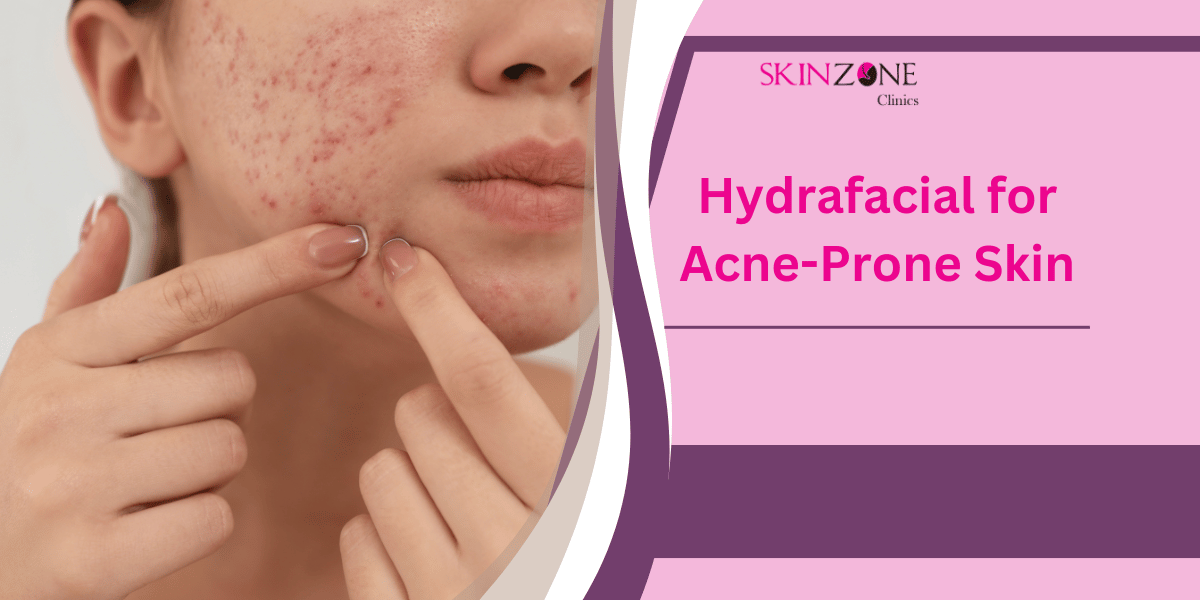
Acne-prone skin reacts fast to oil, dirt, and bacteria. Even small changes in lifestyle or skincare can trigger breakouts. You may face:
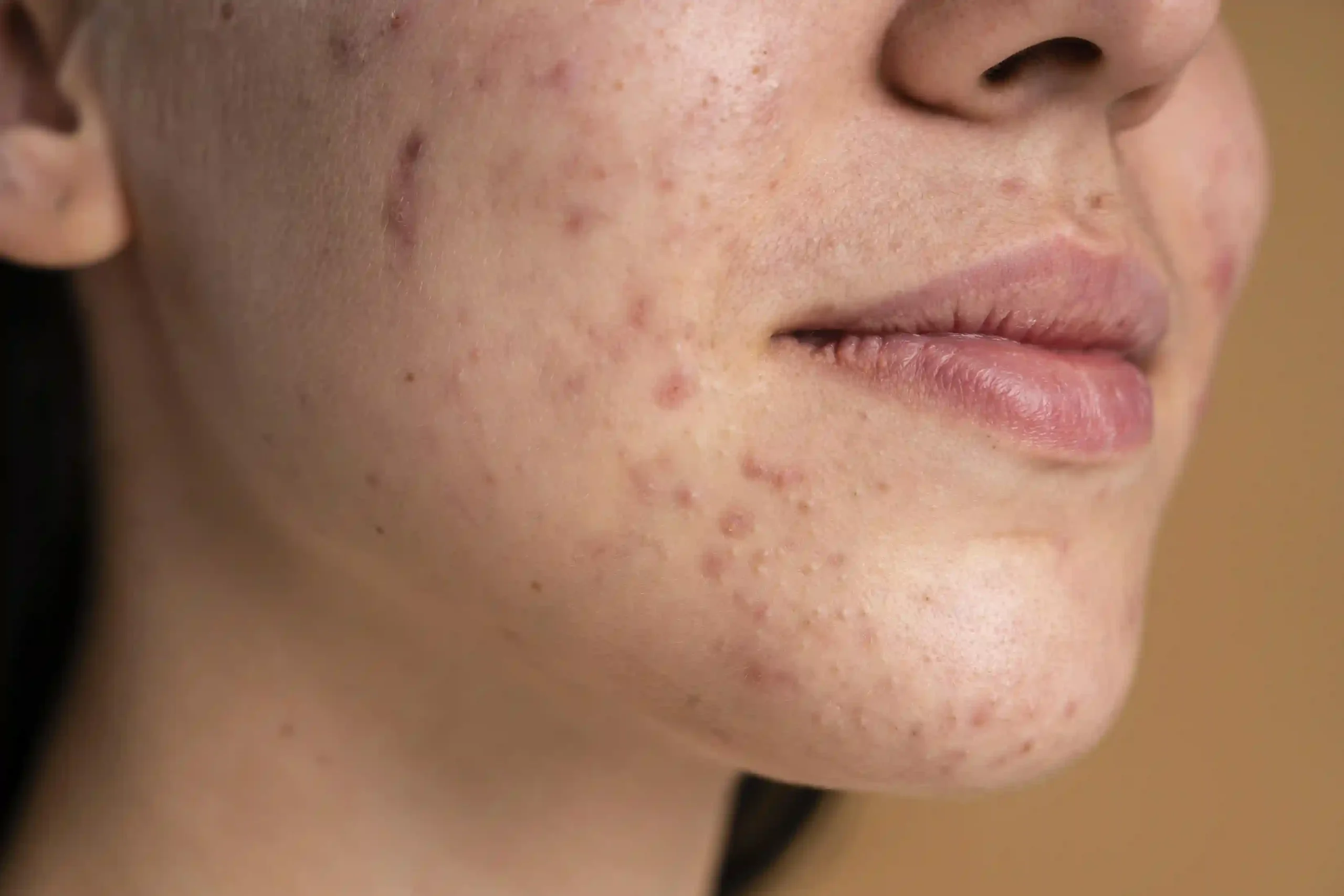
• Whiteheads
• Blackheads
• Painful pimples
• Large, clogged pores
• Redness and swelling
When these problems repeat, they can affect confidence and skin texture. People often try many products, but not all give the deep cleaning the skin needs.
Hydrafacial stands out because it targets the root causes of acne instead of just the surface layer.
What Is a Hydrafacial?
Hydrafacial is a machine-based treatment that cleans, exfoliates, extracts, and hydrates the skin. It works through a step-by-step process that removes debris and supports healthy skin renewal.
The three core steps are:
• Cleanse
• Extract
• Hydrate
The device uses gentle vacuum technology that loosens dirt and oil without harming the skin barrier. This makes it suitable for sensitive and acne-prone skin.
How Hydrafacial Helps Acne-Prone Skin
Hydrafacial helps acne-prone skin in many ways. Each step works together to control breakouts and restore clarity.
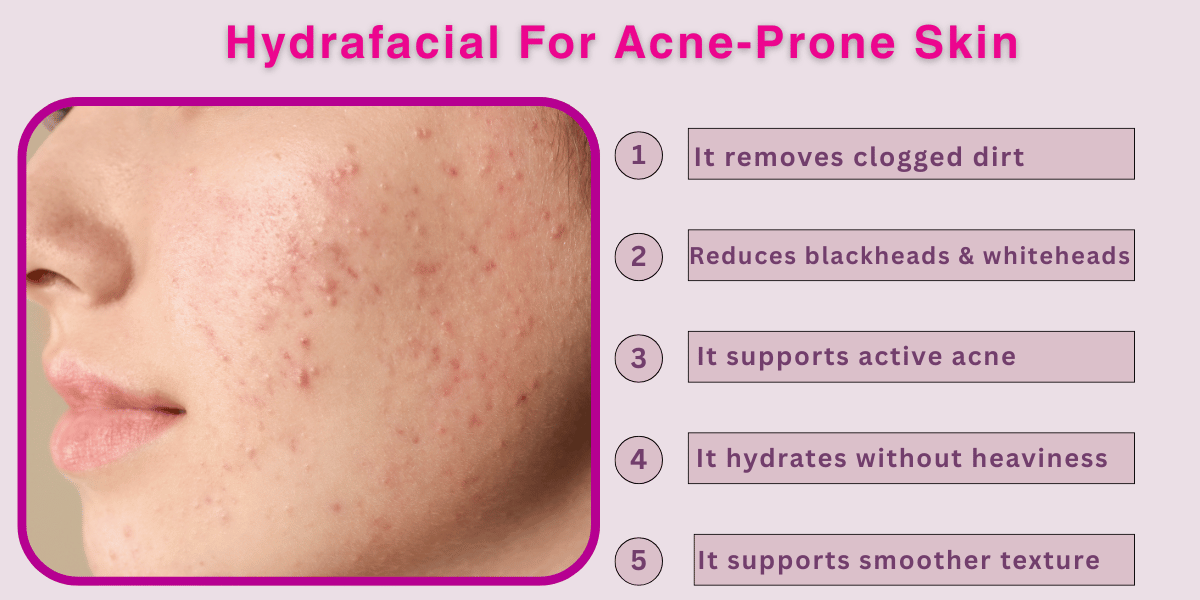
It removes clogged dirt
Oil, sunscreen, and dead skin cells block pores. Hydrafacial pulls them out in a controlled way.
It reduces blackheads and whiteheads
The suction used in the procedure clears stubborn debris that regular facials often miss.
It supports active acne
The treatment calms redness and reduces swelling around pimples.
It hydrates without heaviness
Acne-prone skin still needs moisture. The serums used in Hydrafacial hydrate without triggering oil production.
It supports smoother texture
Many people notice fewer bumps and a softer feel after a few sessions.
Have you ever felt that no matter how much you wash your face, it still feels greasy or bumpy? Hydrafacial helps break this cycle.
Key Steps of a Hydrafacial Session
A standard Hydrafacial involves a few simple stages. Each step targets a core concern for acne-prone skin.
Step 1: Deep cleansing
Your skin is cleaned to remove surface dirt and makeup.
Step 2: Gentle exfoliation
A mild peeling solution loosens dead skin and prepares it for extraction.
Step 3: Painless extraction
A vacuum device removes blackheads, whiteheads, and oil from pores. There is no squeezing or harsh pressure.
Step 4: Hydration
The device infuses the skin with light serums containing antioxidants and hydrating agents.
Step 5: Skin protection
A light layer of moisturizer or sunscreen is applied to protect the fresh skin.
This process delivers both clarity and hydration in one treatment.
Who Benefits the Most from Hydrafacial?
Hydrafacial works well for many people dealing with acne. It is helpful if you have:
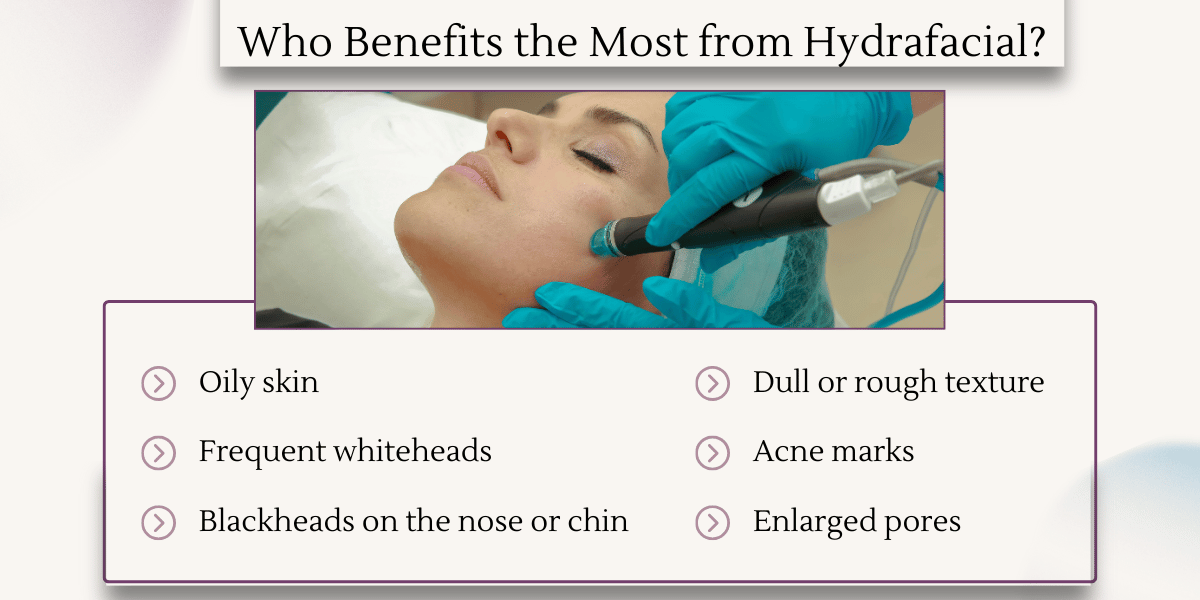
• Oily skin
• Frequent whiteheads
• Blackheads on the nose or chin
• Dull or rough texture
• Acne marks
• Enlarged pores
It is also suitable for those who prefer gentle treatments or cannot tolerate harsh peels.
If you avoid facials because of redness, pain, or sensitivity, Hydrafacial can be a good option.
How Hydrafacial Supports Acne Marks and Pigmentation
Acne-prone skin often shows dark spots or uneven tone even after the pimples fade. Hydrafacial helps by:
• Removing dead cells that make marks look darker
• Improving circulation
• Supporting faster skin repair
• Enhancing the effect of brightening serums
Regular sessions can make the skin look clearer and more even.
How Many Sessions Are Needed for Best Results?
The number of sessions depends on the severity of acne and your skincare goals. Many people notice a visible change after one session, but better results come with consistency.
A common plan includes:
• One session every 3–4 weeks
• Three to six sessions for clearer skin
• Maintenance once every 4–6 weeks
The treatment is gentle enough to repeat regularly without harming the skin barrier.
How Hydrafacial Fits Into a Long-Term Acne Care Plan
Hydrafacial works best when paired with good skincare habits. Your routine may include:
• A mild cleanser
• Light, non-comedogenic moisturizers
• Sunscreen
• Simple exfoliation
• Acne-specific medications if advised by a specialist
Many people use Hydrafacial as a monthly deep-cleaning session to maintain clarity and support healthy renewal.
Think about how your skin behaves between breakouts. A regular Hydrafacial schedule can help stabilize that pattern over time.
Hospital Introduction
Skinzone Clinics in Borivali, Mumbai, offers dermatology, aesthetic, and trichology care with a clear, evidence-based approach. Treatments focus on long-term skin health and natural-looking results through safe and personalized procedures.
Our services include Medspa care such as HIFU, Microdermabrasion, Skin Polishing, Anti Ageing, Medifacials, Hydra Facial, Skin Tightening Laser, and Laser Toning. We provide Botox and fillers including Derma Fillers, Botox, Thread Lift, and Facelift. Skin and hair treatments cover pigmentation, vitiligo, acne, scars, dandruff, alopecia, hair loss, and nails. Laser procedures target pigmentation, hair removal, and fractional resurfacing. The clinic also offers IV therapies with Glutathione, Vitamin C, and Multi Complex Vitamins.
FAQs
1. Is Hydrafacial safe for acne-prone skin?
Yes. The treatment is gentle and suited for oily, sensitive, and breakout-prone skin.
2. Can Hydrafacial reduce active pimples?
It helps calm inflammation and removes buildup that contributes to new pimples.
3. How long do results last?
Most people enjoy fresh, clear skin for two to four weeks after a session.
4. Does the treatment hurt?
No. The suction is mild and does not cause discomfort.
5. Can it remove blackheads?
Yes. Hydrafacial is one of the most effective treatments for blackheads.
Conclusion
Hydrafacial offers a clean and simple way to control acne, brighten the skin, and reduce clogged pores. Its step-by-step approach supports long-term clarity without irritation. People with acne-prone skin often see smoother texture and fewer breakouts when the treatment becomes part of a regular routine.
Skinzone Clinics helps you choose the right plan based on your skin needs so you feel confident in your care. If you want clearer and fresher skin, Hydrafacial can be a strong addition to your skincare journey.